




What Science Says
Animal ethics demands we set aside intuition and tradition in favor of proven facts, especially when our unnecessary habits have harmful consequences for non-human animals.
1. The Impact on Human Health
 1. The Impact on Human Health
 Numerous global health organizations recognize that well-planned, plant-based diets are not only appropriate for all stages of life but offer significant preventive benefits against chronic diseases.
Position on Dietetics
The Academy of Nutrition and Dietetics (AND) states that well-planned vegetarian and vegan diets are healthy, nutritionally adequate, and may provide health benefits in the prevention and treatment of certain diseases.
See a list of major dietetics/nutrition organisations and what they state:
2. Environmental Consequences
 2. Environmental Consequences
 Industrial animal farming is one of the main contributors to greenhouse gas emissions, deforestation, and the depletion of natural resources.
Water Consumption
Fact: Producing a single kilogram of beef can require up to 15,000 liters of water, compared to roughly 1,000 to 2,000 liters for grains.
Source: Water Footprint Network, Water use in animal production3. Animal Sentience: The Scientific Evidence
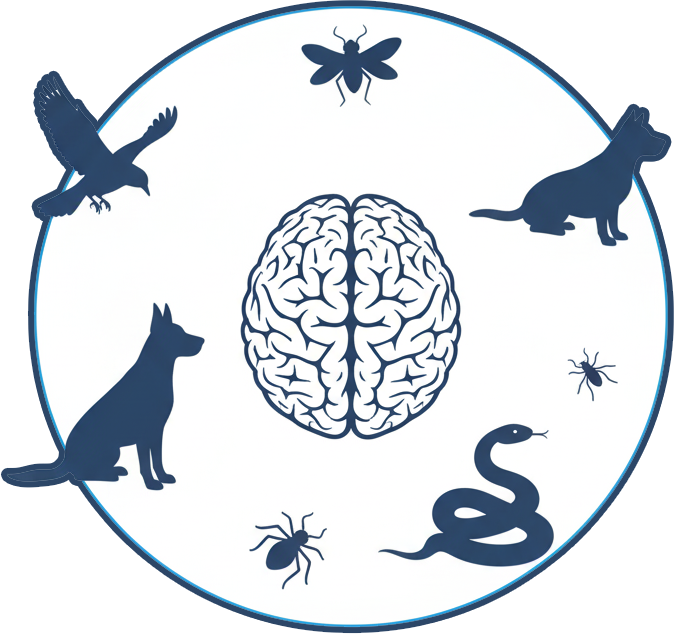 3. Animal Sentience: The Scientific Evidence
 Neurobiological and ethological research has provided overwhelming evidence that many animals are sentient beings, capable of experiencing emotions, pain, pleasure, and fear, and demonstrating self-awareness.
The Cambridge Declaration
In 2012, a group of international neuroscientists signed the Cambridge Declaration on Consciousness, affirming that non-human animals (mammifères, birds, and several others) possess the neurological substrates necessary for consciousness.
Source: The Cambridge Declaration on Consciousness (2012)3. Do plants feel pain?
 3. Do plants feel pain?
 Neurobiological and ethological research has provided overwhelming evidence that many animals are sentient beings, capable of experiencing emotions, pain, pleasure, and fear, and demonstrating self-awareness.
Plant Sentience Debunked
1. Absence of Central Nervous System
Sentience—that is, the capacity to subjectively experience pain, fear, or pleasure—intrinsically depends on a central nervous system (CNS) and a brain.
Plants possess none of the structures necessary for subjective consciousness: neurons, ganglia, cortex, or even a functional equivalent of a brain.
Their electrical signals are slow and mainly ionic, serving functions of transport and growth. They are not comparable to the fast, integrated neuronal signals that enable complex sensory experience in animals.
2. Reactions and Non-ExperiencePlants react to their environment (light, gravity, damage) through processes called tropisms and nastic movements (e.g., the closing of the Venus flytrap, growth toward the sun).
These reactions are automatic and biochemical, regulated by hormones (like auxin) and changes in cellular pressure (turgor). They are analogous to involuntary reflexes in animals or to a machine responding to a sensor.
Reacting to a stimulus does not prove sentience. A thermostat reacts to temperature without being aware of cold. A damaged plant releases chemicals to defend itself, but this does not imply that it feels the associated pain.
2. Fonctionnement Cellulaire DécentraliséEach plant cell can generally survive and function autonomously. When a plant is damaged, it can isolate the injured part to survive.
****Unlike animals, which depend on a central organ, plants have no single command center.
This decentralized structure provides extraordinary resilience but confirms the absence of a consciousness or integrated personality that could be threatened by damage.
Source: The Cambridge Declaration on Consciousness (2012)