
Articles
Articles for a slightly deeper understanding of the vegan ethos.
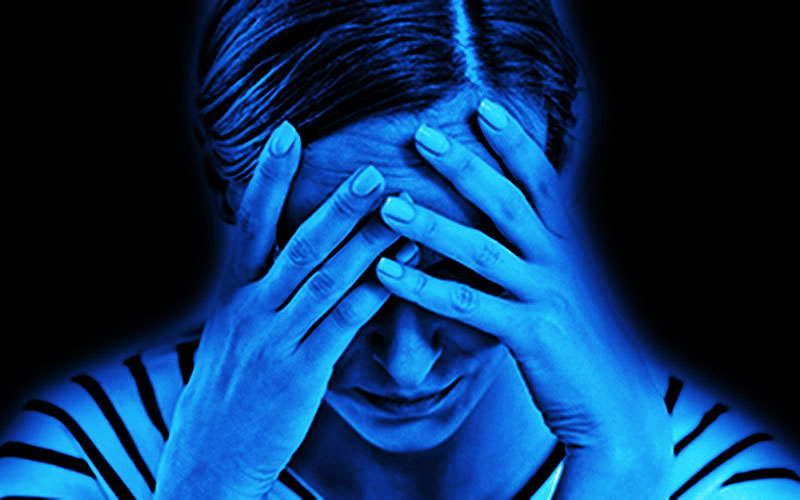
Understanding Vystopia: A Short Excursion into the Anti-Speciesist Mind
All Equal (Tous Égaux) - Anti-Speciesist Blog for a Vegan World | 2019-08-29
More French Content from this Source
“Vystopia” is a word coined by **Claire Mann, a vegan psychologist**. It is the “existential crisis experienced by vegans, arising from the […] awareness of the greed, ubiquitous animal exploitation, and speciesism in a modern dystopia.” Vystopia is a real, persistent feeling that needs to be discussed. It is not a symptom of a mental disorder or over-sensitivity; rather, it is a normal and necessary human reaction to the realization of the enormity of cruelty towards non-human animals. I could never have understood vystopia before truly living it. When I was omnivore and even vegetarian, I didn't have the tools to understand what vystopia truly is; I considered it an excess of irrational sensitivity. That's why I created the following scenario: imagine yourself in this situation, and you will understand a large part of what vegans continuously experience.
Imagine you live in the Southern United States in the early 1800s. You grew up in a white family that has owned cotton fields for generations upon generations. Since you were a child, you've been taught that to run the family business, you must own Black slaves. Your entire family passes down its values to you: you learn that Black people are less intelligent than white people, that they are inferior. You are told that white people give slaves the best possible life, because after all, it is an honor for them to serve those who built the greatest and most respectable country. You learn that the state you grow up in has laws that make slaves "property" of their owners and that human rights do not apply to Black people; they are sub-humans. Everyone thinks this way: your whole family, your neighbors, politicians, your friends, your teachers, doctors, influential people. You grow up believing all of this—how could you do otherwise? These are values your parents instilled in you from a young age. You have never heard a different discourse than that of your community. Your parents are good people, loving and intelligent people—you trust them, just as you trust those who lead the state. Everyone around you only wants the best for others, you are convinced.
One day, an event causes you to question the entire hierarchical system in which you live. You realize that Black people are no less intelligent or less respectable than white people. They suffer injustice, just as white people would suffer if they were in their place. They have the same physical, intellectual, and emotional capacities as white people. The only thing that distinguishes them is their skin color, and you realize that this is not a morally relevant criterion. It hits you full force. Everything you knew becomes false. You realize you were lied to, and that everything you held as truth is based only on an unjust belief, not on facts. Your reality collapses.
You are bursting with impatience to share what you have discovered with those around you. When you inform your family members of everything you have understood, they will finally grasp the truth. You know they will be grateful for you opening their eyes and that they will join you in denouncing this injustice. So, confidently, you tell your family everything you have learned. But they don't react as you predicted. They tell you that you have been brainwashed by extremists. That worrying about the civil rights of Black people is being overly sensitive. That Black people have a roof over their heads and food on their table, that they are not mistreated by their owners, so there is no need to make a fuss. You are told: "Anyway, we've always done it this way! Cotton fields are a family heritage; by what right do you dare criticize ancestral traditions? This is how we've always done it, and it will continue. You'd better get used to it and toughen up."
You expected your benevolent parents to understand… What disappointment and frustration you feel when, instead of all that, they start to justify the oppression. You repeat the process with your closest friends. They, at least, are younger and more open-minded; they will understand. The friends you have known since childhood, those you trust and see as kind-hearted people, react in the exact same way as your family. They justify injustice and slavery, they ridicule you and belittle you. Some tell you that your words are insulting, that you do not respect those who work hard to continue their industry, that you should shut up and respect white people who choose to own slaves. You are told that you have become intolerant and extreme. You can't believe your ears—it is the injustice that is extreme, not the fight against it! But in a world where injustice is normalized, justice seems extreme.
The people you trusted react the opposite way from what you had hoped: how can these loving and generous people not see the injustice behind slavery? And worse, how can they defend it?
You know they have been conditioned by society, by their education, and by the state, but how can you not see them as selfish people, who don't think for themselves, and who justify the unjustifiable? You remind yourself that they are good people, and that they are victims of societal conditioning. But you feel like the world around you has changed. The state, which should protect every human being and ensure peace, bases its laws on horribly unjust principles. The greatest leaders, whom you trusted, advocate discrimination rather than non-violence. The people around you, whom you believed to be benevolent and open-minded, cling to racist values and refuse to see another point of view. The world you believed to be full of possibilities and beautiful moments to seize, with its ups and downs, but full of love and fraternity… this world is now a world of discrimination and terror. And every day, several times per day, elements bring you back to this reality: when you see the cotton clothes of passersby, when your university professors talk about the importance of slavery for the country's economy, when your friends talk about the expansion of their parents' fields and "their" new slaves. It becomes impossible for you to escape this new reality that revolts you.
Sometimes, you wish everything would go back to how it was before. To the time when you were not aware of the injustice. Before, you saw the world through rose-colored glasses: your circle, your country, and yourselves, you made the best possible choices for yourselves and for others, everything was self-evident, and you lived in harmony with the values of those close to you. Now, you see only violence and injustice, and you feel distant from your loved ones. How can you regain that spiritual closeness with them when your values seem so different? You would like to regain the social comfort that ignorance provided you. But this thought shames you; you know it's better to be aware of the injustice, and you tell yourself that your suffering will never be worse than that of the oppressed people. So you continue to live in a dystopian world, trying to inspire others to open their eyes and understand the truth. You dream that one day, the world will finally understand and that humans will come to ask themselves: "How was it possible that this was normal before?".
How do you feel after reading this scenario? These feelings experienced when discovering injustice, and especially when confronted with the denial of others in the face of injustice, are feelings experienced daily by people who become vegan for animal ethics. Since we were children, we are taught that animals are resources: we can eat them, imprison them, use them for tests, kill them to wear their fur, steal their young, their milk, their eggs, their honey, and consider them property. We learn that it is normal, natural, and necessary to consume the flesh of animals, that it is "the cycle of nature." We learn that an animal's life is significantly less important than human life, and that this justifies the exploitation of non-human animals. Vegans experienced a triggering event where they questioned this necessity to kill and exploit animals: they then learned that it is possible to be in excellent health without consuming animals or their secretions, and thus realized that humans have a choice between killing or not. Most humans would agree that it is immoral to inflict suffering or to kill for unnecessary reasons. And that is precisely the principle of veganism: we do not have to exploit, use, and kill animals, so nothing justifies our doing so. We realize that what we believed to be the truth is in fact the result of societal conditioning. And when this realization occurs, we understand that the entire society trivializes animal suffering: thousands of animals die every day for a non-essential food, and this seems perfectly normal for the majority of the population. We face resistance from people in our circle, who prefer to remain in denial and use many irrational excuses to justify their consumption of animal flesh. In short, by becoming vegan, we become aware of animal suffering that is normalized, and we are reminded of it every day by the meat, milk, and eggs on the plates of our peers, by restaurants, advertisements, legislation, cooking shows… We become aware of a reality that we previously ignored, and our perception du monde change complètement.
*Parenthesis: the goal of this scenario is not to draw a parallel between animal exploitation and human exploitation. The goal is rather to create a scenario where one can identify with and recognize the feelings experienced by someone suffering from vystopia. However, there are indeed common points in the discriminatory ideologies of speciesism and racism. Furthermore, some may be shocked upon reading this parallel: how can one compare human oppression and animal oppression? If you recognize yourself in this, I invite you to read my article on speciesism, which explains why it is a discriminatory ideology just like sexism or racism.
By reading this text, you have likely understood the emotions one can experience when their worldview changes. When our perception is modified, our reality is too. And that is why we can feel lonely, isolated, or distant if our perception is not shared by those around us. But if there is one thing to remember for those who feel vystopia, it is this: Let us remember that our perception has not always been what it is now, and that every person has the possibility of experiencing this change in perception as well. Let's remain benevolent, while inspiring and standing up against injustice.
Is vystopia a feeling that one can get rid of? I don't think so, as long as animal exploitation remains normalized. But there are ways to use this feeling to transform it into positive strength, to become an agent of change. If you want to know more about vystopia, I recommend Claire Mann's book, Vystopia (only available in English for now). It is a work that highlights all the situations that vystopia can make us experience, and it gives us the tools to make the best possible use of it.
Vystopia can make us feel lonely, powerless, depressed. But we know that the cause we are fighting for is just, and that injustice cannot last forever. The anti-speciesist movement is growing in scale day by day, and it will only intensify! I will conclude this article with this quote from Gandhi: “First, they ignore you, then they laugh at you, then they fight you, then you combat you, then you win.”
"Personal choice" to eat animal flesh
Face Reality |
I do not respect the so-called "personal choice" to eat animal flesh. Here's why.
On one side, we have proponents of the so-called "personal choice" who believe that consuming animal flesh is a trivial choice that only involves those who make it. They claim they eat, "whatever", they want. In contrast, we vegans say that we must consider non-human animals as individuals who suffer the consequences of this choice, and therefore, we do not eat, "whomever", we want. Veganism respects the right of human and non-human animals to their physical and psychological integrity and to act according to their nature.
The question is, what are the characteristics that non-human animals have, or lack, that make people advocating for the so-called "personal choice" believe they can do whatever they want to them, such as subjecting them to overcrowding, confinement in cages that prevent movement, unsanitary environments, lack of veterinary care, frequent lack of treatment for injuries and diseases, force-feeding, long-distance transport in cramped and stressful conditions at extreme temperatures causing fatal suffocation or freezing where the skin must be cut or scraped to free the animal from the truck's metal surface, genetic manipulation for rapid growth causing health problems, tail docking without anesthesia, dehorning without anesthesia, castration without anesthesia, beak cutting with burning knives without anesthesia, live boiling, and atrocious methods of slaughter such as electric stunning, throat slitting, live grinding, and suffocation in plastic bags.
Science and common sense tell us that non-human animals are sentient beings. That is, beings aware of themselves who are capable of feeling a range of emotions such as joy, sadness, fear, and they can suffer. In this case, I do not understand this appeal to personal choice. The way we style our hair and the kind of music we listen to are truly personal choices. However, it cannot be considered a personal choice when it involves enslaving, terrifying, torturing, or killing a third party to eat them or their secretions when it is unnecessary.
Exactly, it is not necessary to eat animal flesh to be healthy; rather, the opposite is true. And that is why veganism, which is not a diet but a philosophy of life and a social justice movement, is not a matter of opinion but a moral imperative. Therefore, it is not without reason that vegans judge very negatively those who choose to abuse animals because unnecessarily causing suffering and death and encouraging the perpetuation of hellish industries is one of the cruelest choices. We are the opposite of the famous "live and let live" that some use to justify their self-centered choice.
Furthermore, eating animal flesh does not respect the right of future generations to live in a relatively healthy environment for several reasons. It destroys forests, degrades soils, uses an immeasurable amount of water, creates massive pollution, uses the majority, if not most, of crops for livestock, leading to biodiversity loss, and generates more greenhouse gases than the entire transportation sector combined, including cars, trains, ships, and planes. Only a portion of the crops used for livestock could directly feed the world's population. It is also important to consider the exacerbated risks of a new era of antibiotic resistance caused by the animal flesh industry.
To those of you listening right now, I address the question I posed earlier: what are the characteristics that non-human animals have or lack that make you believe you can do whatever you want to them? I repeat, what are the characteristics that non-human animals, have, or lack, that make you believe, you can do whatever, you want, to them?
Forcing our lifestyle on others
Face Reality | 2019-08-29
We are often asked why we, vegans, force our lifestyle on others. To begin with, I think the question is rather why do we want and think that everyone should be vegan. It is obvious that we cannot force people to extend their moral considerations to other animals and to try to develop empathy and compassion for their victims.
We also often hear people say that they respect our choice to be vegans and that we should respect their choice not to be. This shows that they do not understand what veganism is. Veganism is not just a diet, but a moral imperative that requires respecting the right of non-human animals to their physical and psychological integrity. In other words, respect their right to live and act according to their nature without being exploited in any way. It would therefore be illogical for us to respect what we consider to be immoral or cruel. It would be like saying that, although we are against racism, sexism, rape, child and elder abuse, and the oppression of minorities, we should respect other people's choice to be racist, sexist, rape, child and elder abuse or oppress minorities.
We are not trying to tell anyone what to eat, what to wear, how to entertain themselves, or what cosmetics, household products or medicines to use, but to make as many people as possible aware that there are no characteristics that differentiate human animals from nonhuman animals that justify the oppression of the latter who are also sentient beings aware of their experiences and capable of feeling sensations such as pain, pleasure, joy, fear, and suffering. We deplore **speciesism**, that is discrimination based on species. We want the rights of individuals of all species to be equal where needs are the same.
Facing animal suffering, how do you react?
Face Reality | 2019-08-29
Facing animal suffering: how do you react?
Although the health and environmental benefits of veganism are scientifically undeniable, it is crucial to understand that this lifestyle philosophy is primarily based on a fundamental ethical principle: to avoid as much as possible the exploitation, suffering and death of other animals. It involves not contributing to the cruel cycle of supply and demand, for example concerning their bodies, carcasses and secretions, knowing, as has also been scientifically proven, that they are sentient beings capable of feeling various emotions such as joy, sadness, and fear and can have conscious experiences.
Once we become aware of the truth of what we are participating in, our first reaction should be to immediately educate ourselves, so that we can avoid, as much as possible and starting now, the use of animals for their bodies, for example, for testing toxic products, their carcasses and secretions for food consumption, their skin and feathers for clothing, their exploitation for zoos and dolphinariums. Therefore, we must inform ourselves to find out if a plant-based diet is healthy and feasible with the intention of changing our eating behavior immediately if necessary.
Then, once we know that not only is a plant-based diet indeed healthy and feasible, but it even offers significant health benefits compared to a diet including flesh, we must modify our habits as consumers immediately. This seems obvious: who, except for sociopaths or psychopaths, would not want to stop causing such horrible unnecessary suffering as soon as possible? Unfortunately, to my stupefaction, most of the people I meet demonstrate a selfish attitude and show little, very little, or no empathy at all when it involves, for example, changing their consumption behavior or, as they say, depriving themselves of certain things.
Instead of prioritizing the potential cessation of the injustices and all the harm inflicted on non-human animals for which they are responsible and encourage, they emphasize the losses that a change could cause them. Even people whose coherence of discourse on different subjects was previously recognized and even detected some goodness in certain situations show from the start and persistently pettiness and mediocrity. Most of them do not want to have a serious conversation about the issue. In addition, many of them ridicule the efforts of activists who advocate for the rights of animals to live according to their nature and their right to physical and psychological integrity. They make immature remarks such as, 'Tonight, I'll double my steak portion.' Many of them also push the absurdity to find a way to be offended, or even worse, because their behavior is judged immoral.
Yet, despite the significant resistance they have encountered, activists have played and continue to play a key role in the fight against major injustices. They have denounced slavery, racism, segregation and sexism, as well as discrimination against homosexuals and minorities contributing to legal and societal changes that improve the quality of life of those affected. However, it is now them who are asked to expand their moral considerations and tackle forms of oppression and discrimination that have been largely neglected for too long. If they were in the place of their victims, they would beg that we speak on their behalf to rescue them from a miserable existence of abuse and torture. Very few of them are curious to verify if the philosophy of life and social justice that is talked about with so much passion would not have its reasons for being? Their **speciesism**, discrimination based on species, leads them to consider human interests as justified, even when they cause unspeakable torment to individuals of other species.
Here is a non-exhaustive list of excuses used to justify the abuse of other animals, which are not only invalid but often demonstrate a blatant lack of logic if one honestly takes the time to inform oneself and reflect on it.
- Health (proteins, vitamins, or other essential nutrients).
- The perception that some plant-based foods are harmful to health.
- Health optimality.
- Weightlifting or other sports.
- The natural.
- Omnivorousness (including the idea of canines).
- The food chain.
- The idea that some animals would eat us if they had the chance.
- The observation that animals feed on other species.
- The fact that animals would not be moral agents.
- The idea that animals do not have an equivalent level of intelligence as humans.
- The idea that animals do not contribute to society.
- The idea that animals do not feel pain in the same way as humans.
- The idea that animals are meant to be eaten.
- Religious beliefs advocating human domination over animals.
- The alleged high cost of a plant-based diet or its association with privileges.
- The idea that some groups of people live in places where they cannot be vegan.
- Practicability.
- Legality.
- Popularity.
- Tradition.
- Eating habits.
- Compliance with social norms.
- The idea that plants could suffer.
- Gustatory pleasure.
- Reluctance to give up cheese or other animal-derived products.
- Personal preferences against tofu or certain vegetables.
- The extremism label associated with veganism.
- The perception of veganism as a religion.
- The perception of veganism as only a temporary trend.
- Lack of time to cook plant based.
- The animals killed during harvest.
- The idea that some animals would not survive in the wild or would suffer a gruesome death there.
- The claim that animals will die anyway.
- The idea that animals who have had a pleasant life or have been well treated can be humanely killed at a low percentage of their potential life without moral objection.
- Pesticides.
- Mention of organic, sustainable, or other labeled farms.
- The idea that farmers would lose their jobs.
- The idea that human causes must be addressed first.
People using such excuses to justify the exploitation and suffering of non-human animals, most of the time without even seriously examining them, do not seem able or willing to put themselves in the place of their victims. However, it is possible for an initially selfish, little empathetic, and self-centered person to develop these personality traits by practicing self-reflection and receiving feedback and positive reinforcement from trusted people. This would help her become aware of her selfish behaviors and encourage small acts of kindness. She could also be inspired by people she respects or admires, who show empathy and perhaps even compassion towards individuals of any species. Likewise, living in a supportive social environment would facilitate her transformation.
A person who resists this change will obviously struggle to adopt more moral behaviors. **Cognitive dissonance** seems to exacerbate this resistance in several people.
Cognitive dissonance refers to an uncomfortable psychological state that occurs when a person experiences internal conflicts over the contradiction between her beliefs, values, and attitudes. Example: she firmly believes in animal ethics and animal protection, but continues to consume animal "products". She may feel an internal conflict between her moral values and her daily actions. Cognitive dissonance then manifests as a feeling of discomfort or psychological tension, which can lead the person to rationalize her choices, to seek excuses to justify her contradictory behavior, and to no longer think about animals, or even completely avoid the subject.
To reduce this cognitive dissonance, the person can adopt strategies such as learning more about agricultural practices and their impacts on animals, if it is morally acceptable to kill sentient beings for gustatory pleasure, look for plant-based alternatives for her meals, clothes, and leisure, or even actively engage in actions in favor of animal rights. All of this aims to align beliefs and behaviors to reduce internal conflict and regain psychological consistency.
It is clear that there is a lot of work to be done for people to care about the fate of their victims and for the rights of these victims to be recognized and respected. These non-human animals are not machines or automatons that act only on instinct; they are individuals with aspirations, who love and evolve, just like us.
If you step on a dog's tail, you immediately remove your foot because you don't want to hurt him. You feel a little sorry for the animal, but you regularly pay to have the cow or the pig tortured and killed.
To know how to treat a non-human animal, ask yourself how you would treat him if he were human. This is not about comparing the intrinsic values of humans to other animals, but about considering the well-being, suffering and interest in living of an individual who experiences them regardless of species. Imagine it is you or a loved one who is in the place of the lobster you are about to plunge into boiling water.
You do feel offended
Face Reality | 2019-08-29
You do feel offended because we question and inform you about the cruelty you encourage and impose on non-human animals? We await your arguments. If we don't hear from you, we have no choice but to consider that you haven't received the urgent information, and it is our duty to present it to you again. You should thank us for believing that you have the capacity and the will to not delay making the connection, if necessary, between your consumer lifestyle and that of an oppressor and to consider that you do not consciously want to cause so much harm. Who wouldn't want to evolve as quickly as possible to avoid causing unnecessary suffering? Aren't you grateful to those who have contributed and continue to contribute to reducing the negative impacts of major social injustices like slavery and all forms of segregation? We speak for other animals the same way you would like us to speak for you if you were in their place. If someone was about to plunge you, your family and your friends into a boiling water tank, would you prefer that we take a patient approach based on gradual change, aiming to save future generations, thus letting you perish painfully, or a direct approach without euphemisms hoping to save you too? If you are not vegan, the least you can do is to inform yourself and reflect on what makes you believe that you can oppress sentient beings who are conscious beings capable of emotions, love, aspirations and subjective experiences, simply because they are not of the same species as you. If you are vegan, make your voice heard as much as possible. If you remain silent, you are telling your loved ones and everyone you meet that the choice to enslave, mistreat and torture is banal and acceptable.
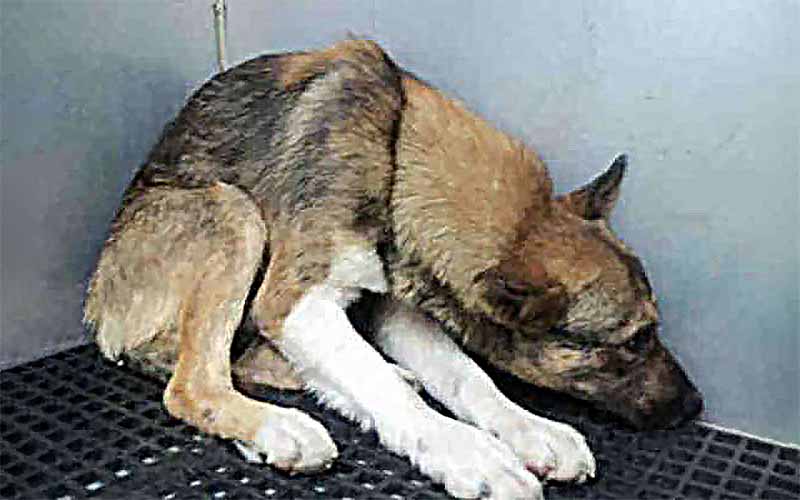
Heartbreaking letter from a shelter employee.
Author: Jazz M. Onster | Date unknown. Translated from French.
I believe our society needs its attention drawn to this. As the manager of an animal pound/shelter, I'm going to share something with you... an inside look, if you'll allow me.
First off, **all animal sellers/breeders should work at least ONE DAY in a pound.**
Perhaps by seeing those sad, lost looks... the troubled eyes, you would change your mind about breeding and selling to people you don't even know.
That puppy you just sold will probably end up in my pound when it's no longer a cute ball of fluff.
So... how would you feel if you knew there is a **90% chance that dog will never leave the pound** if it even makes it here? Whether it's purebred or not. **50% of the dogs who enter my center, abandoned or from the street, are purebred**...
The most frequent excuses I hear are:
-“We're moving and we can't take our cat/dog.”
**Really?** Where are you moving where you can't take an animal and why choose that place instead of another where you could keep it?
-“The dog grew bigger than we thought.” **And what size did you think a German Shepherd was?!**
-“I don't have time to take care of it” - Is that so? **I work 10 or 12 hours a day and still manage to find time for my 6 dogs.**
-“It ruins the whole yard for us” - Why don't you take it inside with you?
I am always told, “No need to try hard to find it a home, **we know it will be adopted, it's a good dog**”
The sad thing is that **your animal will NOT be adopted**... and do you know how stressful a pound is?
Let me tell you:
The animal has **72 hours to find a new family** from the moment you leave it. Sometimes a little longer if the pound is not full and manages to keep it in perfect health.
If it catches a cold, **it dies**.
It will be confined in a small cage, surrounded by the barking and crying of 25 others.
It will have to fend for itself to eat and sleep.
It will be depressed and **constantly cry for the family that abandoned it**.
If it's lucky, and if I have enough volunteers, it might be taken out from time to time.
Otherwise, **it will receive no attention**, except for a plate of food slipped under the cage door and a few squirts of water.
If the dog is large, black, or a "bull" breed (pitbull, mastiff...), **you have led it to death the moment it passed through the door.** These dogs are generally not adopted. It doesn't matter if it's "gentle" or "trained"...
If the dog is not adopted within 72 hours of its entry and the shelter is full, **it will be euthanized**.
If the shelter is not full and the dog is gentle enough and an attractive breed, it is possible that its execution will be postponed, but not for long.
Most dogs are placed in holding cages and are **euthanized if they show the slightest aggression**.
Even the calmest dog is capable of changing in such an environment.
If your dog is contaminated with kennel cough (infectious canine tracheobronchitis) or any other respiratory infection, **it will be euthanized immediately**, simply because pounds do not have the means to pay for 150 euro treatments.
And here is something about euthanasia for those who have never witnessed how a perfectly healthy animal will be euthanized:
First, it will be taken out of its cage on a leash.
Dogs always think they are going for a walk, they come out happy, wagging their tail... until they get to the "room," where **they all brake with all four paws.**
They must smell or sense death or feel the sad souls that have been left there. It's strange but it happens with every single one.
The dog or cat will be held by 1 or 2 veterinary technicians, depending on its size and nervousness.
Next, an euthanasia specialist or a veterinarian will begin the process of finding a vein in its front paw and inject the dose of **“pink substance”**.
Let's hope the animal is not scared by being restrained. I have seen some **scratch themselves and end up covered in their own blood**, made deaf by the barking and screams.
Not all "go to sleep" immediately. Sometimes they have spasms for a moment and **soil themselves.**
Once finished, your animal's carcass will be **stacked like a piece of wood, in a large freezer**, with all the other animals waiting to be picked up like trash.
What happens next? Will it be incinerated? Do they take it to the landfill? Do they turn it into pet food? **You will never know, and you will probably never ask.**
It was just an animal and you can always buy another one, right?
I hope that if you have read this far, **your eyes have been troubled** and you cannot get the images that occupy my mind every day when I come home from work out of your head.
**I hate my job, I hate that it exists** and I hate knowing that it will always exist unless you change and realize the lives you are wasting, far more numerous than just the one you leave at the pound.
**Between 9 and 11 million animals die daily in pounds and you are the only ones who can stop this.**
I do my best to save the lives I can but shelters (pounds) are always full and every day **more animals come in than go out.**
I just want to insist on this point: **DO NOT BREED OR BUY ANIMALS AS LONG AS THERE ARE THOSE DYING IN POUNDS.**
Hate me if you want. The truth is painful and reality is what it is.
I just hope that with this text at least one person will have changed their mind about breeding and abandoning their animal at a pound or buying a dog.
Hopefully one day someone will come to my job and say **"I read this and I want to adopt"**. It would be worth it.
If you want the situation to change, send this text to all your contacts.
Jazz M. Onster
DAIRY PRODUCTS
Face Reality | 2019-08-29
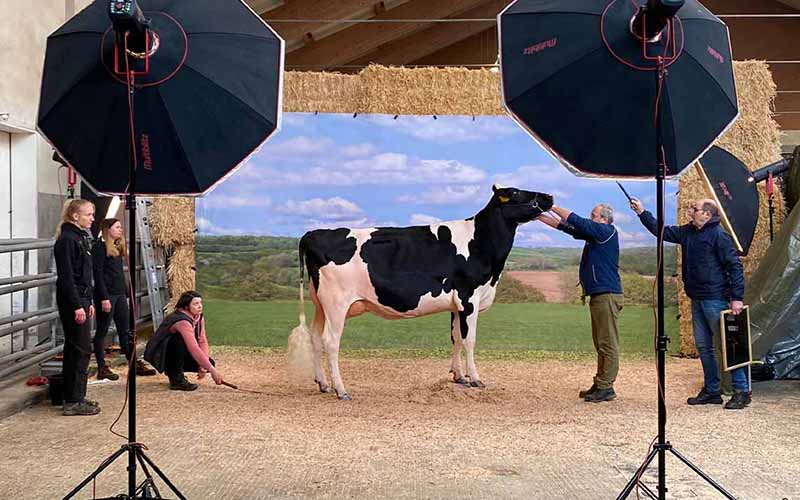
Many scientific studies, conducted in various fields such as biology, animal psychology, and neuroscience, have provided strong evidence of the ability of non-human animals, including cows, to feel complex emotions and experience conscious awareness. Cows demonstrate the ability to form social bonds with their peers, and this ability extends to their interactions with humans. For example, they can remember individuals, whether human or not, with whom they interact and react differently based on their previous experiences with them.
To produce milk, bulls are masturbated by hand or with an electro-ejaculator inserted into the anus until ejaculation. Cows are confined and forcibly inseminated. Workers insert an arm into the cow's rectum to position and steady the reproductive tract from the inside. Than a metal or plastic rod is inserted through the vagina and cervix, to deposited the bull semen into the uterus.
In some cases, when farmers have only a few cows, they move as far away as possible as soon as they realize the veterinarian is arriving. They remember the sperm gun used on them during past interventions. Then, their calf is stolen from them so that the milk, meant for the calf, can instead be sold and consumed by humans, leaving the mothers bewildered, crying in pain for days, sometimes weeks.
The babies taken from them, deprived of their mother's milk and affection, are isolated in individual stalls in calf pens. They are fed a soy milk mixture, dehorned, often without anesthesia, and frequently castrated. For example, without anesthesia, an incision is made in the scrotum to remove the testicles by cutting the spermatic and vascular cords that attach them. Considered by-products of the dairy industry, they are slaughtered shortly after birth or condemned to a short life of suffering before being killed and cut into pieces. Most female calves are destined for the same fate as their mothers.
Cows are kept in gestation and artificially inseminated repeatedly. These frequent and forced cycles, along with their living conditions and the demands of intensive production, cause them major health problems. They suffer from numerous diseases and injuries, including udder infections (mastitis), which are common and extremely painful. Cows are often attached to milking devices that cause abrasions or painful electric shocks when poorly maintained or adjusted. Their supernumerary teats are cut off, and their horns are generally cut off, often without anesthesia. The wounds from dehorning are then cauterized to prevent infections. In some farms, their tails are also cut off without anesthesia. They often spend the majority of their lives without exercise, on cement or metal, sometimes in their own urine and feces, which makes them lame in most cases.
After about five years, they are exhausted, while they could normally live about twenty years, and are slaughtered to become cheap meat. To increase profit, it is often arranged for cows to be pregnant and for their calf to be ready to be born at the time of slaughter. Some cows, called fistulated, have their flanks pierced and sealed with a plug that can be opened and closed, allowing direct access to the stomach or other parts of the cow's digestive system.
In addition to all this, here is what consumers of dairy products contribute to and support. Dairy farm workers, facing difficult working conditions and intense productivity pressures, may sometimes, even often, engage in acts of animal abuse. Cows, when they resist procedures, can be subjected to brutal treatments such as punches and beatings, tail twisting, or being poked with a fork.
Cows suffer from stress, fear, and brutality, whether the farm is labeled organic, free-range, grass-fed, or lovingly treated. Without resorting to shortcuts and certain unacceptable and unethical farming methods, farms would not be profitable.
Once at the slaughterhouse, cows face often stressful conditions and violent, cruel slaughter methods. Undercover investigations also regularly reveal acts of animal abuse in these facilities, just as in farms, throughout the production process. There is more suffering in a glass of milk or a piece of cheese than in a piece of meat because even though animals used for their meat also have a miserable life and are killed in terror and pain, they die young.
Before claiming that a particular farm treats cows supposedly ethically, it is essential to thoroughly check with reliable sources that have no conflict of interest, such as animal rights organizations. This precaution is even more crucial when considering, deplorably, consuming their carcasses or secretions, which would be paradoxical because it is not possible to enslave or kill an animal ethically.
It's not about comparing the intrinsic values of humans and other animals, but about treating each individual equally where their interests are equal. Just like humans, cows have an interest in avoiding enslavement, avoiding suffering, and living fully.
xxxxxxxxxxxxxxxxxxxxxxxxx
xxxxxxxxxxxxxxxxxxxx | 2019-08-29
Nothing to say.